Public Health Museum Before-After Comparison
Some before and after comparisons of the Public Health Museum space to better understand how things were changed. This was only a $5,000 grant, so we had to do a lot with a little and had to look to the collection for objects that would work better, but much was removed to have more clear interpretation of themes and to eliminate confusion.
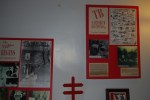
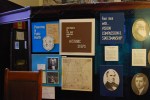
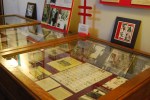
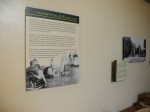
The entry – formerly showed the secretaries area of the facility, which was formerly an almshouse, and a poster presentation on the history of Public Health in Massachusetts, and a case and wall exhibition on Tuberculosis, with very few objects (mostly prints).
Changes – kept the entry area, but added interpretation, moved a desk and clock from the larger gallery and kept the idea of interpreting the history of the Almshouse, and how it related to Public Health. Emphasis was especially made to the facility’s role in treating the “pauper insane.” The TB exhibit was moved to the larger gallery, where it coordinated better with two other infectious diseases that were
Before:
After:
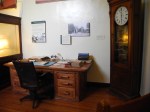


Larger Gallery – this was a mishmash of themes and small poster board exhibits. A large desk at the front was intended to show the superintendent of the Hospital’s desk. This was moved to the first room as it related to the history of the building. Much of the “storage on display” was removed. Anything that was not interpreted was removed to storage. A loom with signage for “occupational therapy” was moved to a room devoted to mental health.
Before:

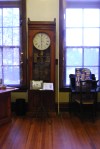
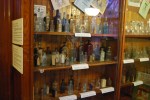
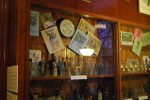

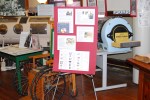


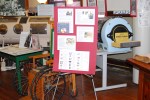
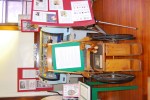
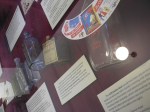
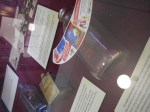
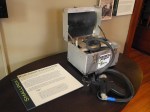
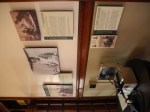
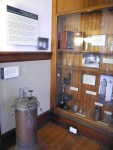
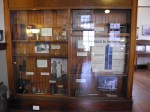
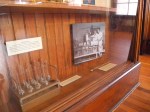
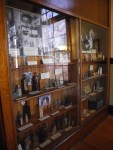
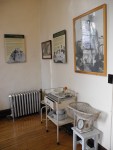
After – Three infectious diseases were highlighted (polio, smallpox, TB) with a main panel and defined separations. The iron lung was given more prominence in the space formerly used by the large desk. Many items of storage furniture that just held books or other objects that were not interpreted were removed for a cleaner look. The built in cases kept their themes of food safety and patent medicines, but were reworked:

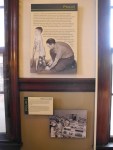

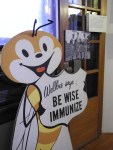


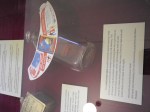
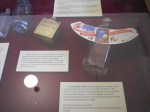

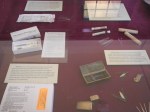







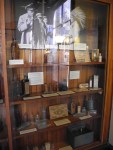
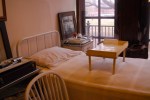
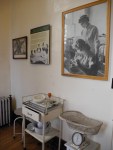
The third room was formerly set up to look like a mid-20th century hospital room, with a smattering of unrelated poster exhibits along the edges and office space for museum volunteers.
Before:
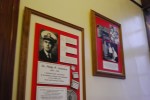
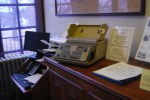
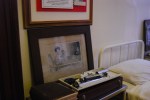
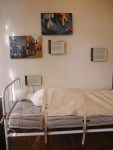
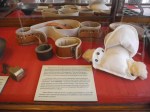
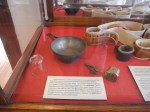
The whole room was devoted to one subject: The care and treatment of the mentally ill. We were fortunate to find a restraint in a drawer and re-used the bed to illustrate this troubling reality. A case that formerly housed an exhibition of mostly reprinted smallpox photos was used and many items were pulled from collections storage to illustrate various practices from blood-letting, to medication. The loom that formerly sat in the center of the larger gallery with a sign for “occupational therapy” was combined with other items including a new donation of a uniform from a shuttered mental institution that was recently donated. Most of this space was completely newly reworked utilizing collections that had formerly been unseen and not deemed usable. This is the most remarkable transformation and one I’m most proud of.
After:




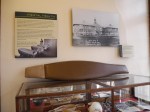
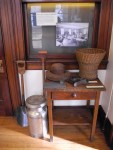

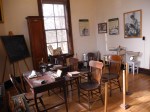
Nurse classroom formerly used to refer to a school for nurses that was on the hospital campus. The entire room was taken up with this replica 1930s classroom space, with no interpretation in 3/4 of the room. The other side of the room showed a tableau with nurses uniforms, a little bit about public health nursing, and some other non-related objects (chairs, violin, etc.).

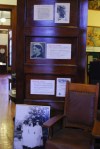
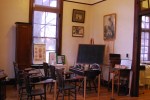
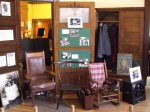
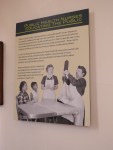
The orientation of the classroom was reversed, so that the wall space behind it could be utilized to discuss home health and infant care by public health nurses. The last row of the classroom was removed, as I felt it could make the same statement without using the entire space. Interpretation through consistent panels and labeling was added.
After:


 sara lundberg